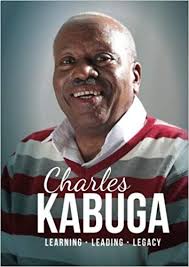
I first saw Charles Kabuga’s book a couple of months or so ago. I must have been window shopping at the Acacia Mall Aristoc bookstore branch. Despite its beautiful cover page, it didn’t strike me because I didn’t know the author. How could I have known someone who retired from civil service when I was about 2? Not long after that incident, my father knocked at my bedroom door and handed me some 5 books – all autobiographies and with Charles Kabuga’s on top of them. It was the biggest volume of them all and something told me I was to begin with this very book when I eventually got the time to read them. The other factor for this decision was the description of the author. His was an occupation I had not the faintest idea about.
‘Charles Kabuga, an adult educator by profession and a co-operator by occupation…,’ is the opening sentence on the ‘About the Author’ page. I am talking about the latter job: a co-operator. For us millennials, co-operatives are alien to most of us. That is a sad reality, I am persuaded to add. They are something we hear about in rumours. What is most known to us, I presume is the SACCO. Co-operatives are still in existence, but they must be in shambles because they never make it to the news and so we never hear a thing about them; yet, an understanding of the co-operative enterprise will only inform one that these are the engines of the poverty eradication drive. Something must be done immediately!
Charles Kabuga: Learning, Leading, Legacy, is a smart and amazing title and I find it summarises the whole essence of life. Don’t we learn, lead and seek to leave a legacy of considerable worth? The book is well-bound and its feel is smooth. The font is readable for most people who can read well with ease and you may not need your reading glasses. The pages are of the highest quality and the book’s design and structure are just amazing. The story is told in a beautiful language and little wonder, you’ll discover the writer was a playwright and teacher of English. It is also coloured with letters and some of the most beautiful poems you will ever read. Need I say that Charles Kabuga is a talented poet? It is captivating and its intention is not lost, that is, to preserve the history and lineage of the family and to share the author’s experiences and lessons and knowledge hoping that it will inspire one or two to reach the greatness they dream of. A good book must look good to read. This autobiography is one.
The story starts with humble beginnings in Kabale, Kigezi and I must commend the author for the labour he took to trace his roots literally from the formation of the clan he belongs to. He helps the youngsters to understand who they are and throughout the story, his clanmates, Ba-Mungwe, and particularly his sub clanmates, Abasaakuru, wherever he met with them, he treated with brotherly love. He was raised to appreciate the institution of family and how he has instilled this in his children is something enviable. The history is rich and challenging and when I go back to the village, I will ask my grandmother for those little details I didn’t pay attention to.
Unlike the Baganda whose clan can be told by one’s name, we the Banyankore and Bakiga have to teach our children these facts of their identity. I have known of some taboos which have been committed where clanmates have had sexual relations, let alone, actually marry albeit surreptitiously. It is not uncommon; therefore, to find a 30-year-old man who does not know his clan! Charles Kabuga maintains a very close relationship with his relatives and he carries this to his in-laws. He also labours to understand their roots and he makes mention of these facts. It is interesting to know these things, to know one’s wife so well, one’s child-in-law so well. That is the essence of family. I belong to the Ba-Musigyi clan, which is the Kikiga version of the Bagahe clan among the Banyankore (I am yet to understand the nexus). So, if you are a Mugahe/Musigyi reading this, feel free to give me a shout as a comment.
He started schooling at a time when it was very hard and almost unbearable to attend school, but thanks to Charles Kabuga’s parents, who accepted Christianity early enough to understand the value of education. It paid off surely. He was scolded for dodging school and his father always asked him what he had learnt that day. It was not material that his father was himself uneducated, the old man wanted to know and it must be substantial a report if credibility was to be won. Thus, Charles Kabuga braved the very long distance, harsh weather, danger from hostile boys, madmen, and the beatings at school for late coming. On he went and progressed well until the question of the purpose of his life and what he wanted to become haunted him. This is a question that many youths grapple with today, some unknowingly. Like most of us, Charles Kabuga was haunted by this question after attending very good schools and which background is most likely to be considered a set off to a successful life. Surely it is, but does it answer the question?
Charles Kabuga had performed well and had gone through Kigezi High School for junior secondary education and Butobere Senior Secondary School, now Kigezi College Butobere, where he was in the pioneer class, for senior secondary education. This must not be confused for high school which also refers to A-levels. He had then proceeded to Kampala Technical Institute for a certificate course in mechanical engineering. It was while he was here that the first blow of the question hit him. His lecturer, a white professor, openly and coldly told him that his aspiration of becoming an engineer could not be achieved because one needed a degree to become an engineer! This was disheartening especially because that was not the case for although he indeed needed a degree to become an engineer, it was still possible to aim for the degree by upgrading after the certificate course. This speaks so much of some teachers who do not encourage their students and foster their aspirations. It is so pathetic and Charles Kabuga was brave enough to decide to change courses and leave the institute. He knew that he could progress to get a university degree if he trained in the teaching profession. He did so and indeed earned a university degree later.
The choices that Charles Kabuga has taken in his life are hard ones and it takes a thorough understanding of one’s career interests and ambitions as well as purpose in life to make such choices. One such choice was to forego a scholarship leading to a PhD for his marriage to his Queen, Margaret. This was not done once by the way. Charles Kabuga has taken deliberate hard decisions so that he may achieve the fullest satisfaction and peace and happiness. These are attributes many ignore, yet, they form the foundation of our livelihood. The silent and salient question posed in these experiences is: At the end of the day, are you happy?
Charles Kabuga is a happy and social man. He cherishes friendships and out of these, has created a family out of his relations. Love is cherished throughout the book. He loves his community. He loves his family. He loves his clanmates. He loves his workmates. Special mention must be made also that he loves his dear wife, his Queen, Margaret. He has taught this to his children and the fruits of that lesson are manifest in his grandchildren who are very loving as well. He forgives just as he is repentant. His home is a truly Christian home where one of his sons castigated him for not attending Church and spending a lot of time drinking at the club. Another son also wrote a letter indulging the parents to accept Christ as their Lord and saviour. Conversations on these issues are always held and as friends, amicably resolved for the best of their family. Charles Kabuga is; thus, a very civil and liberal father who believes that children are independent-minded with their aspirations and beliefs and passions. Apart from guiding them, he has not imposed on them what he desires and this is something to be learnt by the parents of today. Many children are tormented with these kinds of parental imposition and suffer a lot of distress with some turning to substance abuse and others ending their lives. It must be appreciated that a child is a person just as its father or mother is. Children, therefore, have rights and these should be cherished.
Charles Kabuga is very patriotic not only to his country but also to his homeland, Kabale. He deliberately made his family stay in Kabale so his children could appreciate that life happens in the village and more so that that is where they hail from. Despite living in the city, his children are not aliens in the village. To this end, Charles Kabuga has also cherished his siblings, especially those who were not chanced to study. He has supported them and not deserted them. Charles Kabuga must also be commended for excellent service in the civil service and most especially when he was at the helm of the Uganda Co-operative Alliance. He is one of the very few who leave the civil service scandal-free. He does not shy away from mentioning one scandal that he faced when he was alleged to have corruptly acquired huge sums of money from the corporation. The story made major headlines in one of the papers, but because of his integrity, the paper paid heavily for defamation following a lawsuit. And as far as civility and good governance are concerned, it is important to note also that he decided to retire even before he had reached the age and even when he was most likely to have his contract renewed. Many leaders should learn from this.
The book is very rich in the history of the establishment of the Adult Studies Centre and Centre for Continuing Education at Makerere University, where he did so much great work. It details his life and works in the cooperative movement at both local and international levels. It also provides a history of the political environment in Kigezi and particularly a thorough account of the Banyama/Baboga controversy. It is a very resourceful book and very inspirational.
Charles Kabuga: Learning, Leading, Legacy is a worthwhile autobiography to read! Get it for 50,000 Uganda shillings at major bookshops in the country or buy it off Amazon.
So, that was me, let me hear from you too…